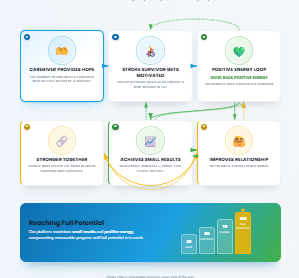
Caregiver,
remember this about hope:
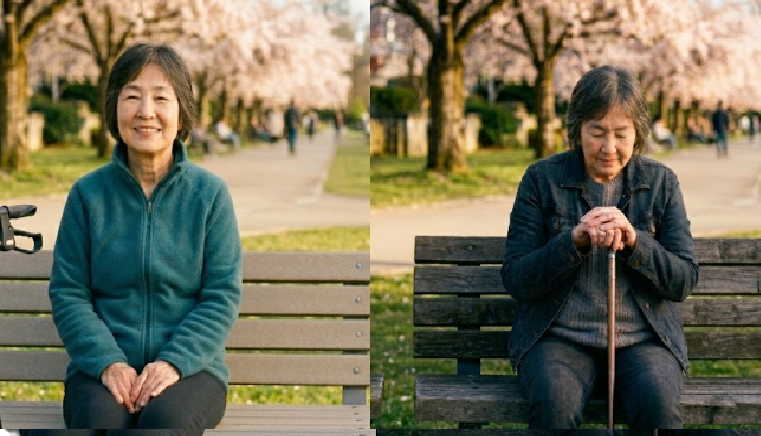
A mind with hope envisions possibilities, resilience, and a future to work toward. In contrast, a mind without hope falls into despair, seeing only darkness and perceiving struggle as insurmountable.
A stroke survivor needs a realistic amount of hope:
Neuroplasticity will allow you to reach way further in your recovery than many people realise. But for that, you have to do the work.
Particularised hopes
🏃♂️
Hopes directed at concrete actions, specific timelines, or recovery outcomes.
“Hoping to complete physical therapy and walk again.”
The expression of hope
📖
How hope is communicated, processed, and made visible inside your journey.
“Writing positive journal entries and sharing milestones.”
Central Identities
Re-evaluating past accomplishments, current state, and future identity frameworks.
Meaningful Hopes
Specific localized goals that offer regular purpose and daily joy during rehabilitation.
🔥
The Central Engine
Recovery is hard work.
Hard work needs motivation.
Hard work needs motivation.
Relief from Suffering
Immediate, symptom-focused hope targeting short term physical comfort and rest.
Superficial Hopes
Less critical, transient, non-identity defining expectations or event outcomes.
Factors which influence hope
🤝
External environments and internal health metrics that support or challenge progress.
“A supportive medical team and strong family network.”
The spectrum of hope
📊
Recognizing that hope behaves as a sliding fluid scale, not an all-or-nothing switch.
“Feeling a strong 8/10 on the hope scale today.”
FIGURE 1: Illustrating the framework of hope.